 Shipping & Returns



Sustainable Life
5 sustainable materials you can buy with a clear conscience
Juni
Which materials are sustainable?
It can be difficult to know what to look out for when buying sustainable clothing. Of course, the choice of material plays an important role, but which fabrics are actually environmentally friendly? We have compiled a list of five sustainable textiles that you can buy with a clear conscience.
- Organic cotton
- Organic linen
- Organic hemp fiber
- Tencel
- ApplePeel
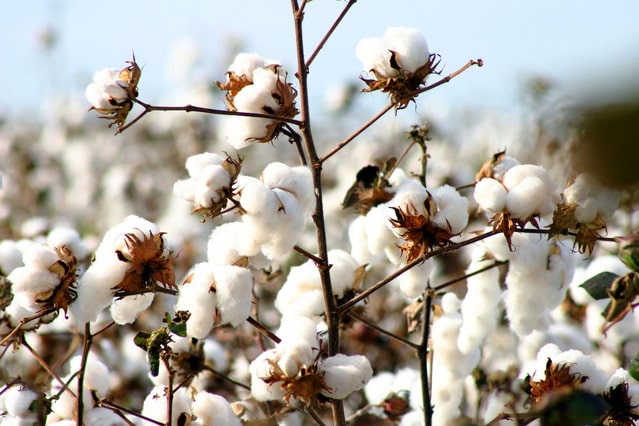
1. organic cotton
Cotton is the most popular textile fiber in the world. Unfortunately, however, conventional cotton is not sustainable at all. The main reasons for this are the enormous water consumption and the use of environmentally harmful pesticides during production. Therefore, when buying cotton, you should make sure that it is organically grown.
Firstly, the use of synthetic chemical fertilizers and pesticides is prohibited in the organic cultivation of cotton. Instead, pests are controlled using biological methods such as crop rotation. Crop rotation means that the cotton fields are alternately planted with cotton and other plant species. This allows the soil to recover and the quality is maintained.
Secondly, water consumption is significantly lower with organic cotton than with conventional cultivation. The reason for this is that the soil in organic cultivation contains more organic matter and can therefore store more water. In addition, rainwater is often collected for organic cultivation and used for irrigation. Organic farming produces 45% less CO2 emissions and uses 87% less water than conventional farming.
2. organic linen
Organic linen is also a sustainable choice of material that is made from the fibers of the flax plant. This fabric is moisture-regulating, dirt-repellent and very hard-wearing. And as long as the material is not dyed, it is also completely biodegradable.
Flax cultivation is very environmentally friendly, as flax can also be grown in our latitudes and therefore does not need to be irrigated artificially thanks to natural rainfall. In addition, this plant is extremely resistant to pests, which is why it does not require any environmentally harmful fertilizers or pesticides.
3. organic hemp fiber
Clothing can also be made from hemp fiber. Clothing and other products made from hemp have excellent moisture regulation, which is why they are particularly suitable for warmer temperatures.
The robust hemp plant can be grown in a much more environmentally friendly way than cotton. Hemp grows well in moderate climates where there is enough rainfall to avoid the need for artificial irrigation and therefore use less water. In addition, hemp is extremely fast-growing and requires little care and very little to no pesticides.
4. tencel
Tencel Lyocell and Modal fibers are made from the sustainable raw material wood. The fabric is extremely breathable, moisture-regulating and can be used for a wide variety of purposes and combined with a wide variety of materials. The material is also completely biodegradable.
The raw material for Tencel is primarily obtained from Asian eucalyptus wood from sustainably managed forests. The advantage is that the land used to grow eucalyptus cannot be used for any other purpose and therefore does not compete with food cultivation. Eucalyptus is also characterized by the fact that it does not require pesticides or artificial irrigation.
5th ApplePeel
ApplePeel is a promising alternative to leather and is made from the remains of apple juice production in Italy. The material is water-repellent, extremely durable and extremely versatile, as it can be shaped into a wide variety of colors and structures.
To produce ApplePeel, the apple remnants from apple juice production, i.e. stems, fibers and peels, are dried, processed into a fine powder and then mixed with a biodegradable plastic and a solvent. Unlike real leather, the production of ApplePeel™ does not generate any toxic by-products and no valuable resources are consumed. The material is also produced without the use of animals, making it a more sustainable and vegan alternative to real leather.
Click here for products made from ApplePeel